
Jiva Studio
Software with a Soul
We craft thoughtful products where timeless wisdom and modern technology meet — tools that are calm, careful, and made to last.


Philosophy
Jiva — the living spark
In Sanskrit, jiva means the living soul. It is the name we hold ourselves to: software that is alive to its purpose, not just functional. Three commitments shape everything we ship.
Soul
Every product begins with a purpose worth serving. We build things that respect the people who use them and the wisdom they carry.
Craft
We sweat the quiet details — the load that never stutters, the copy that reads kindly, the edge case nobody asked about. Care compounds.
Clarity
Calm interfaces, honest defaults, no dark patterns. Technology should feel like a clear lake, not a crowded marketplace.


Selected work
What we’re building
- 01
Listen to Sadhu
LiveListen to the wisdom of the sages
Mobile · AI Search · Audio
A library of spiritual lectures with AI-assisted search, smart collections, and a reverent reading experience — on iOS, Android, and the web.
- 02
Memorize Shlokas
LiveTake the scriptures to heart
Mobile · Memory · Sanskrit
Memorize Sanskrit shlokas from the Bhagavad-gītā, Śrīmad-Bhāgavatam and beyond — with spaced repetition that brings each verse back right when you need it.
- 03
Dham Navigator
ConceptA pilgrim’s guide to the holy dhams
Mobile · Offline · Pilgrimage
An offline guidebook to the sacred dhams — Vrindavan, Mayapur and Jagannath Puri — with the story of every place, walking routes between them, and photographs to find your way.
- 04
AICharya
LiveThe Vedic library, in your AI assistant
MCP · AI · Open Corpus
An open, read-only MCP server that gives any AI assistant direct access to the Listen to Sadhu corpus — verses in the original with transliteration and translation, purports and commentaries, and transcribed lectures you can search, cite, and play inline.
Journal
On craft, technology, and the ideas behind what we build.

The cheapest token is the one you never send
Proofreading a lecture with a language model cost 10.9 cents. It now costs 1.5 — seven times less, and none of the saving came from finding a cheaper model. It came from noticing what we were paying the model to repeat back to us.
Read
The library, in your assistant
AICharya opens the Listen to Sadhu corpus to any AI assistant — how the library is shaped, the two ways to address it, and the two-lane search that fuses meaning with exact strings so a paraphrase and a rare Sanskrit term both land on the real passage.
Read
How the research agent works
How the chat answers only from a trusted corpus, never inventing a source, and does it for well under a cent — a walk through the retrieval-and-grounding pipeline, followed end to end on one real question, with the numbers at every step.
Read
Cheating the forgetting curve
A śloka you learn today is mostly gone by next week — that is not a failure of willpower, it is a law of memory first measured in 1885. Memorize Shlokas does not fight the curve; it schedules around it, with two small schedulers and a fifty-year-old algorithm.
Read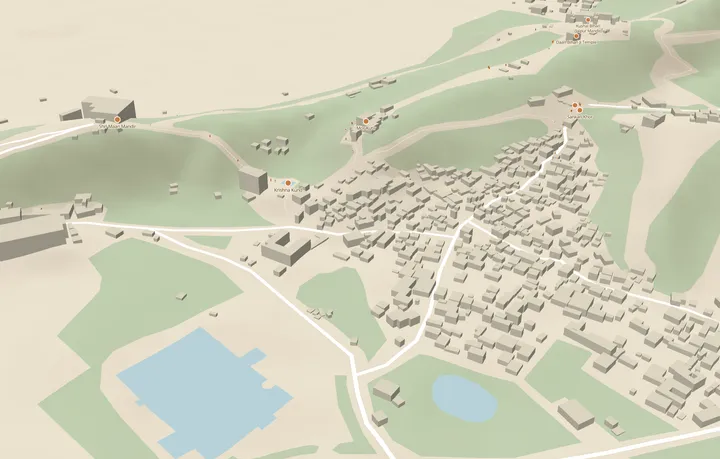
Where a pilgrim's map comes from
Dham Navigator works with the radio off — every street, hill, building, temple and footpath is already on the phone. Here is exactly where all of that data comes from, what format it lives in, and how we make it.
Read
The day the reviews piled up
Textbook spaced repetition tells you the perfect day to review each verse — and if you obey it literally, it hands you sixty cards on Tuesday and four on Wednesday. Here is the small, slightly mischievous change that spreads the load without breaking the math.
Read

Let’s build something with a soul
Have an idea worth serving, or want to collaborate? We’d love to hear from you.